
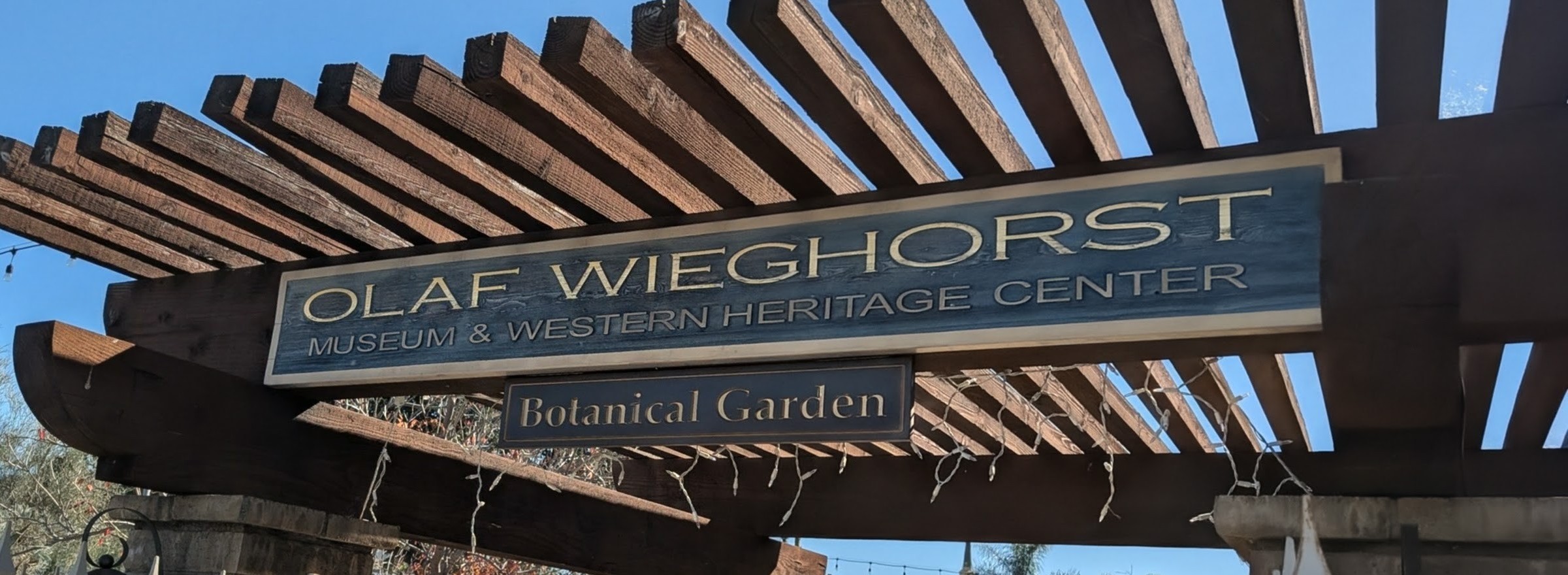
Olaf Wieghorst Botanical Garden
The Olaf Wieghorst Botanical Garden (formerly known as the “Cactus and Succulent Garden”) is a curated, public garden designed to complement the Olaf Wieghorst Museum and the historic Wieghorst home on museum grounds. The garden is located in Downtown El Cajon, California. Michael Bostwick, the former Horticultural Director of the world famous San Diego Zoo, is the curator of the garden.
The garden’s original focus was cactus and succulent species from around the world. With the addition of new trees and specimen plants like palms and cycads, the garden expanded its collection from around 300 specimens to over 700 presently. Most are adapted to the arid San Diego and Sonoran Desert environments.
The garden showcases desert trees including a smoke tree, a Palo Verde, a Mesquite and a Texas Ebony. Other trees include the California native Coast Live Oak (Quercus agrifolia), and two species of Brachychiton (ruepestris and papuleum). Palm trees (Butia capitata), along with Cycads (cycas revolute), Yucca Gloriosa, and Dasylirion quadrangulatum are recent additions. A specialty area contains multiple species of the Genus Opuntia (prickly pear cactus).
With the additions, the garden takes its place among The West’s finest botanic gardens.
Art in the Garden
Horses were part of Olaf’s paintings and legacy. As you stroll through the garden, enjoy the horse sculptures nestled among the trees. The garden proudly displays:
- Pegasus by local artist James Hubbell,
- Wicked Pony (reproduction) by Frederick Remington, and
- A life size horse – sculpted with metal scraps and machine parts by local artist Ricky Tiango.
The garden is an artists’ favorite and has hosted events for the San Diego Watercolor Society and the East County Art Association.
Listen to local artist Chuck McPherson talk about art in the garden.
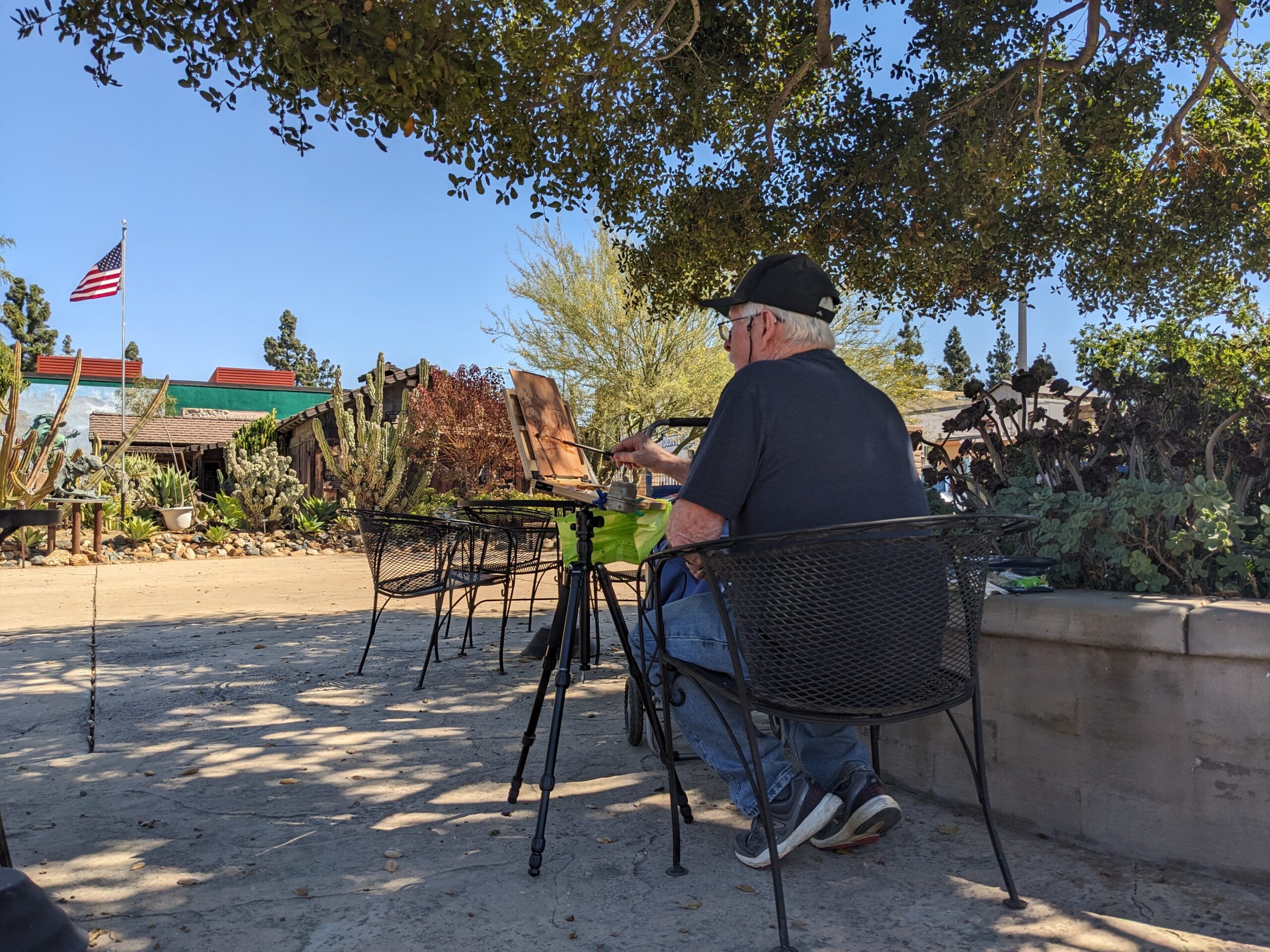
A plein air artist relaxes in the Olaf Wieghorst Botanical Garden.
What is a Botanical Garden?
A botanical garden is a beautiful place where plants are labeled. It is a place to study the difference in species. It is a place to see mature specimens and to plan your water-wise garden.
Botanic gardens keep records of plant materials in the collection dividing them into multiple categories. Typically, at least seventy per cent (70%) of the plants in the garden are signed with the botanical name, common name and nativity of the specimen.
Welcome to the Olaf Wieghorst Botanical Garden.
Public walkways bordering the garden are accessible from Rea Avenue. Visit the garden during the normal hours of museum operations and by appointment.